We Don't Have a Cold Plunge. Here's Why That's the Point.
There are no tiles in our shower system. No mirrors. Nothing that signals a premium experience before you've even taken your coat off.
And there's no cold plunge. That one comes up more than almost anything else. People assume it's an oversight, or a budget line we haven't gotten to yet. It isn't. It's a decision, and it's probably the clearest example we have of what values-led means once you get past the parts anyone can see.
A proper cold plunge is expensive in ways that aren't obvious from the outside. Commercial systems need chemically balanced, filtered water, and keeping that running outdoors through a Canadian winter means real infrastructure: heating and cooling systems, filtration that won't freeze or fail, ongoing maintenance that never stops. Then there's what happens to that water afterward. We take clean, safe bathing water seriously, and we take disposing of it responsibly just as seriously, not as an afterthought.
We could absorb that cost and pass it on. Plenty of places do, and the result is a beautiful plunge pool and a price point that quietly decides who gets to use it.
So we didn't build one. We use cold showers and buckets instead, which is actually a very traditional, much older and more direct way to cool down than people assume. Long before plunge pools existed, this was the practice: buckets, cold water, a body doing exactly what it needed to do. It's not a scaled-down version of the real thing. It's closer to where the ritual actually comes from.
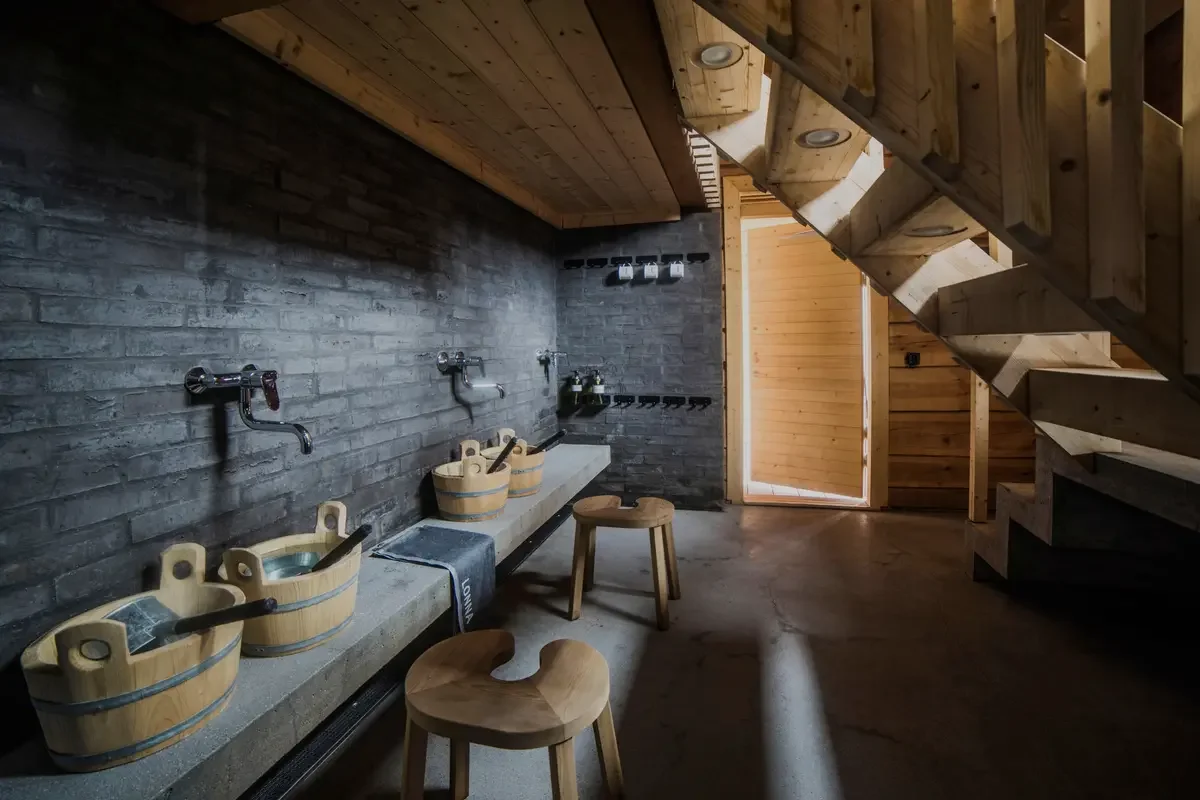
Lonna Sauna, Helsinki
That's the pattern behind almost every decision we make that guests never see. Who a space signals it's for, before anyone says a word.
The pricing, the programming, the partnerships we pursue and the ones we don't, are all trying to answer the same question: how do we make this as reachable as possible without losing what makes it worth reaching for? Keeping the price as flat as we can. Turning down add-ons that would change the feel of the room. Choosing partners for shared values over convenience. None of it shows up directly in the experience. It shapes it completely.
Evergreen Brick Works is the clearest example of the right partnership. They're not just a landlord with a beautiful location. They're an incubator for independent operators proving that accessible, nature-connected public space is worth building in a city that keeps optimising for transaction instead. We share the same question, and that alignment changes what's possible.
This isn't an anti-profit argument. Scale is how you create access, and a sauna serving two hundred people a season isn't solving a city-wide problem. But there's a real difference between growing because it helps more people and growing because it helps the margin. The businesses getting this right stay honest about which one is happening, and make the harder call when the two stop pointing the same way.
We're still early. The price is as low as we can hold it and still keep the lights on. It's not free. The location is beautiful and still requires transit or a car for much of the city. These are real gaps, and we'd rather name them than dress them up in language about community values.
The first season showed us the demand is real, and how much further there is to go. The people who kept coming back, who brought friends, who had conversations in that room they hadn't had anywhere else, they deserve more of this. More locations. More access. More of the city deciding a warm room with other people in it is worth maintaining the same way it maintains a park.
We can't build all of that alone. But we can stay honest about what we're trying to do, hold the line on what makes it real, even when the easier answer is a nicer plunge pool and a higher price.
That's the only thing worth protecting.