What Actually Makes a Sauna Good, Not Just Heat
Most people's picture of a sauna comes from a gym locker room or a spa: a dry, quiet room, some heat, a bucket of water in the corner nobody's ever allowed to touch (if it’s even there in the first place), fifteen minutes in and out with not much else to say about it. Underwhelming, maybe. Or the opposite kind of experience; a stranger sort of overwhelming, sitting in enforced silence because that's apparently what "luxury" looks like there because that is the expectation, trying to perform relaxation on command in a room that felt more like a test of composure than a place to actually feel at ease.
Neither is quite the tradition a sauna actually comes from. A sauna built in the Finnish tradition is a fairly specific piece of design, and most wellness spaces were never really trying to recreate it, that's simply not what they're for. A hotel spa is built to serve a broad audience alongside a long list of other amenities; a sauna built the traditional way is built around one thing. Different goals, different rooms. Neither is a lesser version of the other. They're just not doing the same job.
Special shoutout to Kamu Sauna, our building partners, who brought technical, operational and cultural best practices leading to a lot of the hidden intention behind our sauna.
Here are six of the differences, and what they actually come down to.
Myth: The water on the rocks is optional
Reality: in the tradition sauna comes from, that steam (called löyly in Finnish) is the whole point, not a decorative extra. When water hits properly hot stones, it releases a wave of humid heat that changes the entire feel of the room: softer, fuller, less like standing next to a space heater. If you've been somewhere you were told not to add water to the rocks, that's usually a design choice rather than a safety rule (unless it is a stove truly not designed to be used in a sauna). Many wellness-space stoves simply aren't built to hold enough stones for it, because throwing steam wasn't really what the room was designed around.
We heat with a Finnish-style electric stove built by Homecraft, Canadian made, family owned, stones sourced from British Columbia, chosen because it holds enough stone mass to throw real löyly, generously, without the stove choking on it.
Myth: All that matters is how hot it gets
Reality: heat quality matters more than heat quantity. A room can hit 90°C and still feel unpleasant if the heat is uneven or sharp, the kind of dry, prickly heat that gives people headaches and sends them out early. That comes down to things most people never think to ask about: what the walls are actually built from, how the room is insulated, how air moves through it. Skip any of that and you get a room that's technically hot but never quite comfortable.
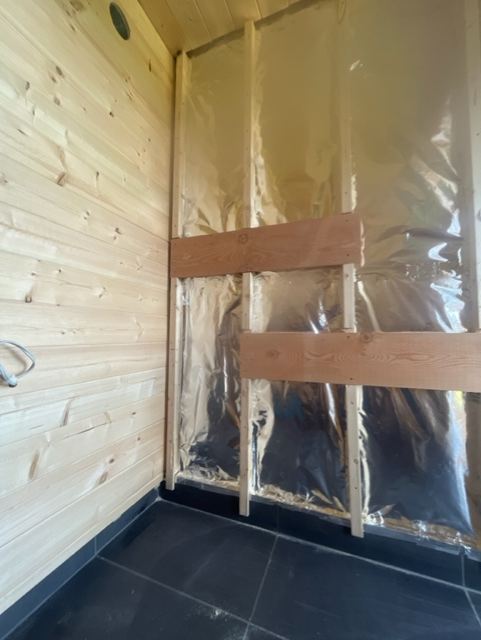
We build to the principles of Lassi Liikkanen, widely regarded as one of the leading voices in Finnish sauna design, learned through his book, his workshops, and our own experience running saunas for both private and commercial use, which wear very differently. Insulation, vapor barrier, air gap, and ventilation, installed in the right order underneath the paneling, are what let heat move through a room evenly instead of collecting in one spot or leaking out the walls.
The layer most will never see: vapor barrier and insulation going in before the paneling goes up.
Ventilation is the other half that often goes unnoticed, and makes a big difference; where fresh air enters, and where it's pulled back out. Get that wrong and a room either stays stuffy and stale, or loses its heat as fast as the stove can produce it.
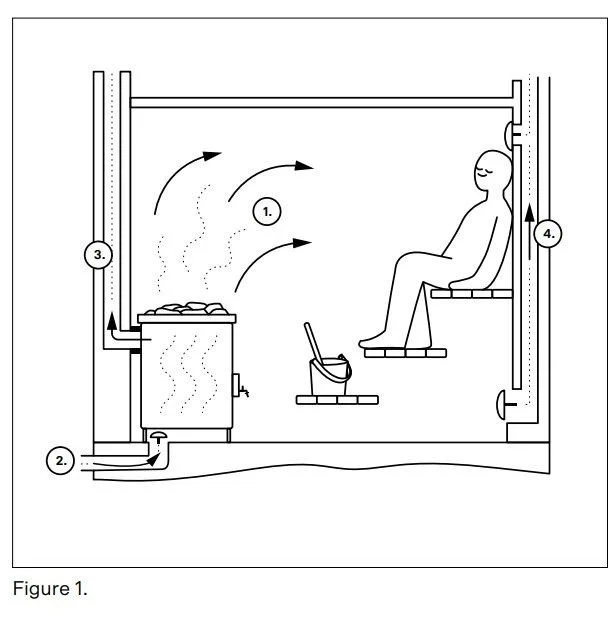
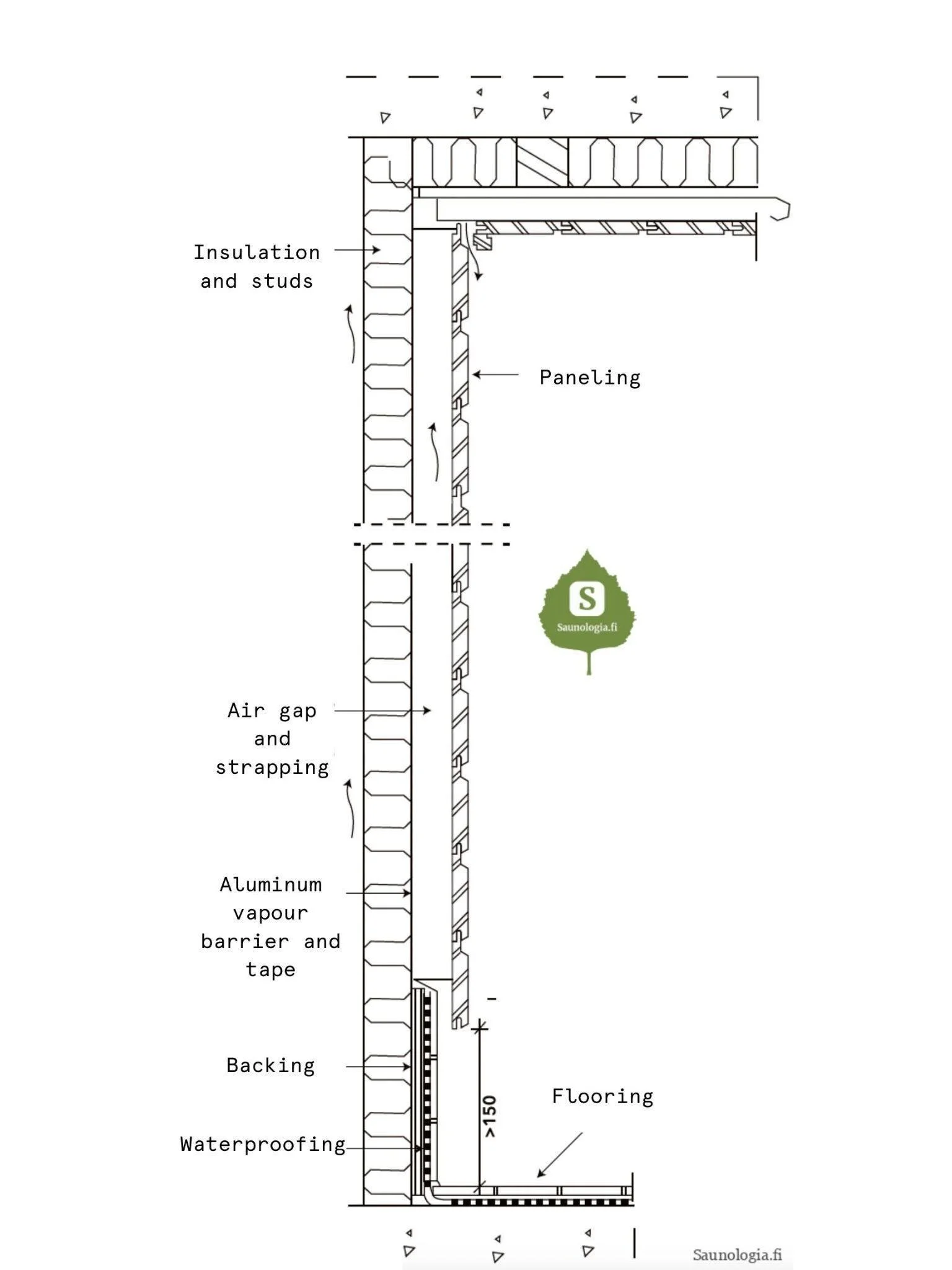
How air actually moves through a well-ventilated sauna: fresh air drawn in low, steam and heat rising, exhaust venting out high.
Myth: A barrel-shaped sauna is basically the same as any other
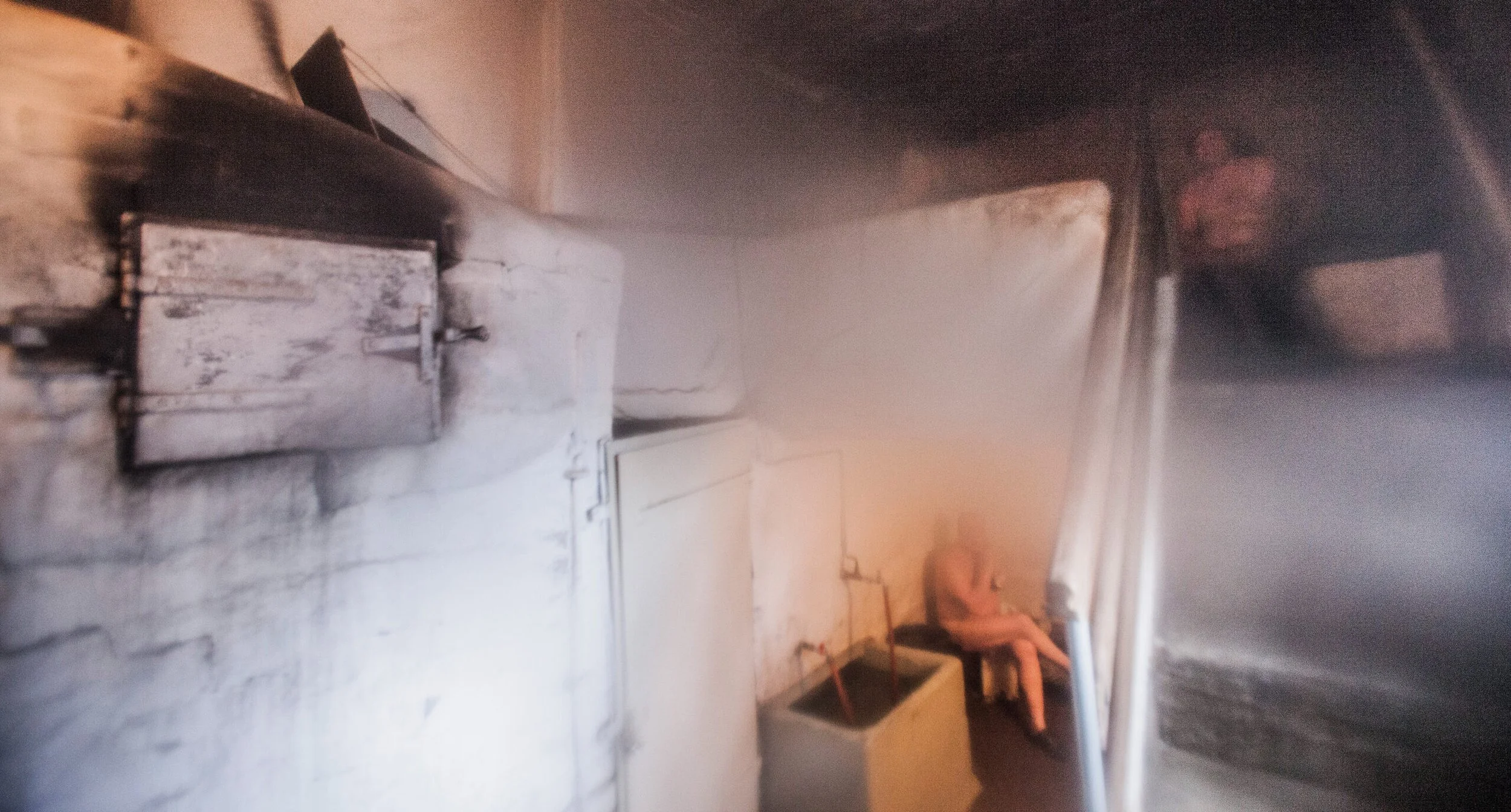
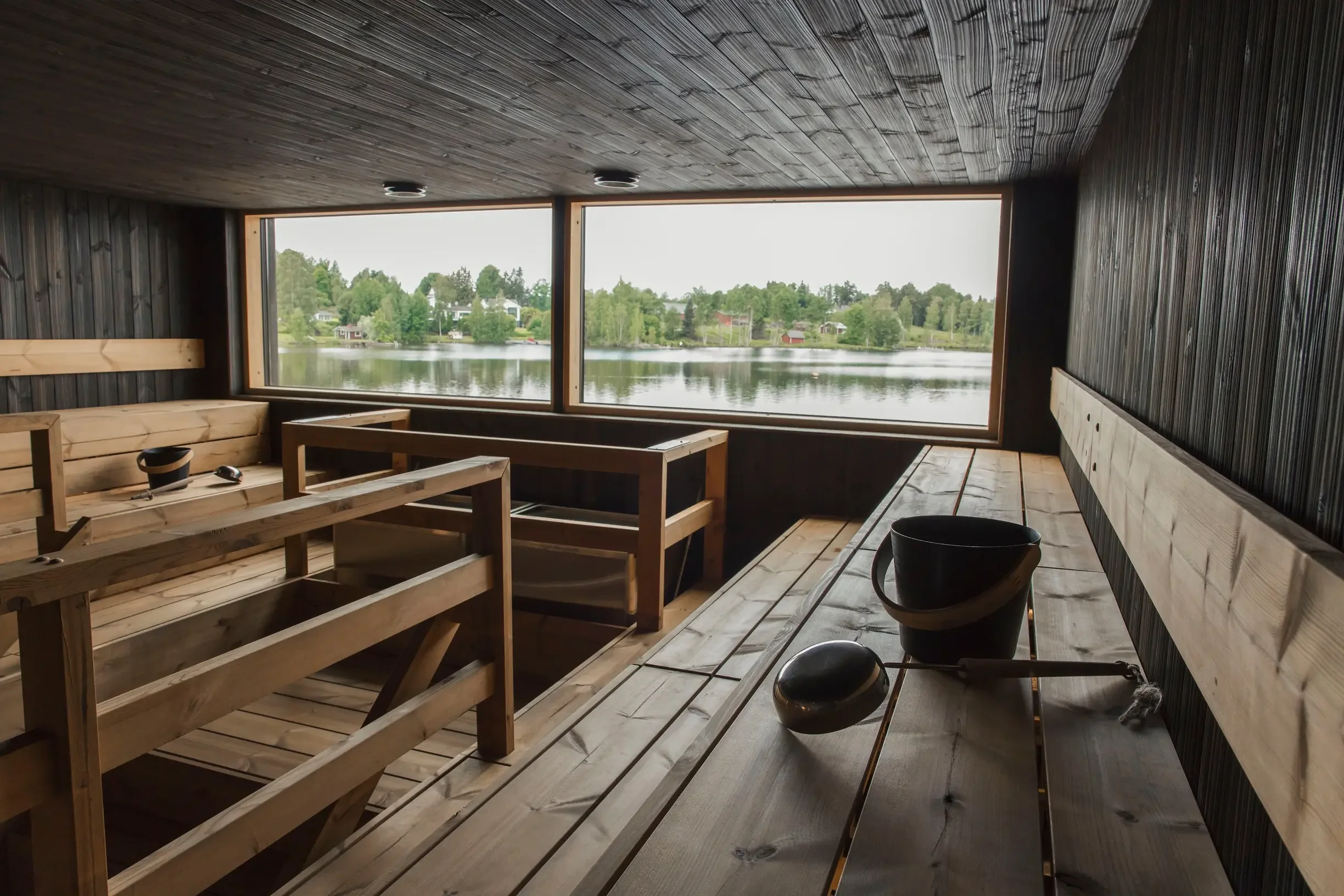
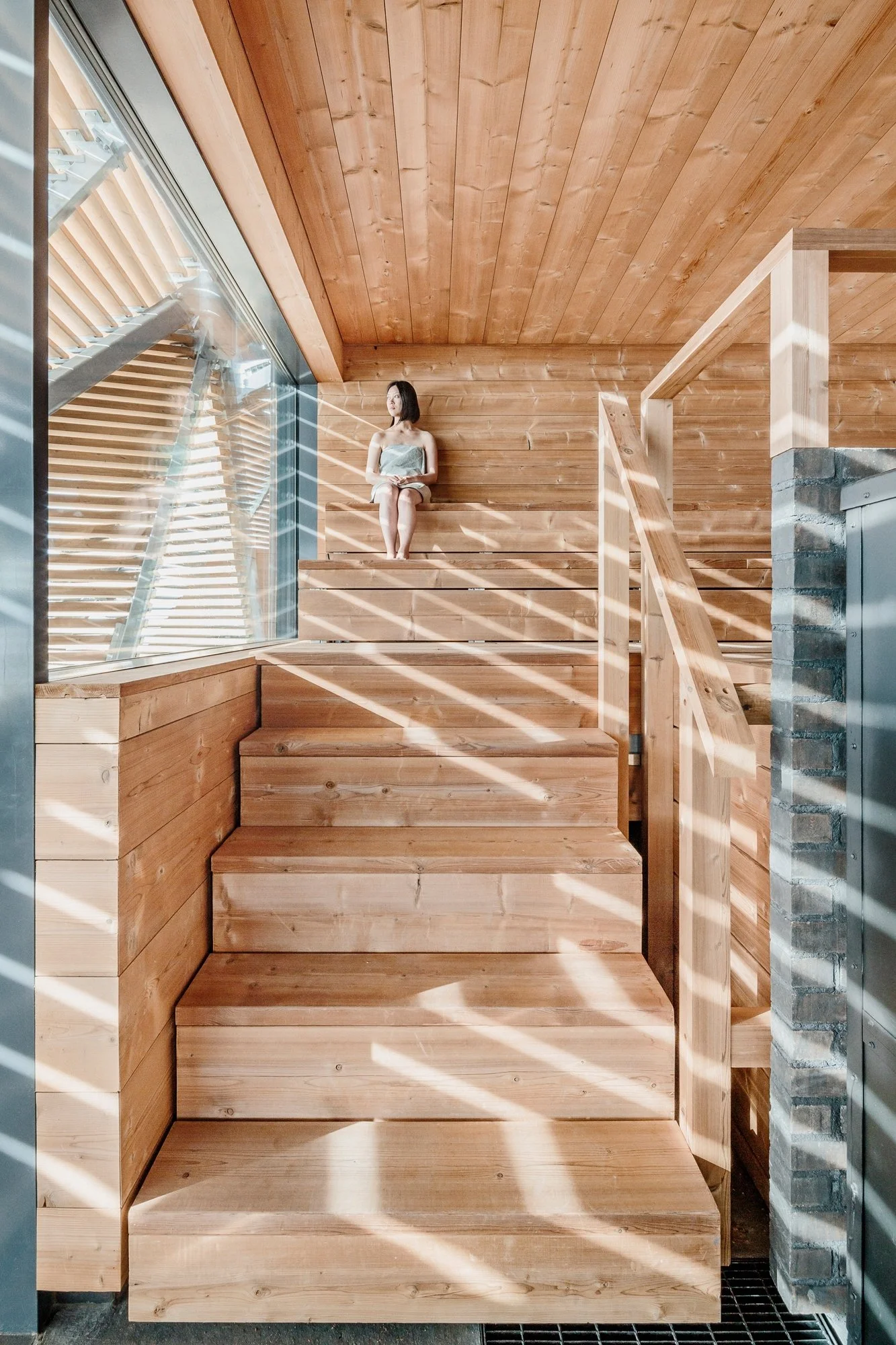
Reality: shape affects how evenly a room heats. Barrel saunas, the kind you see coming from kits at Costco or readily rented, tend to heat unevenly, with hot air pooling near the top while the lower half of the room stays noticeably cooler. A properly built box-shaped room, insulated and ventilated correctly, tends to heat more evenly from floor to ceiling, making for a more comfortable, also less harsh experience.
This is how saunas look in Finland. Notice the structure shape, bench height in relation to the stove and the ceiling. This leads to better, more even heat.
Myth: More people (or fewer) is automatically better
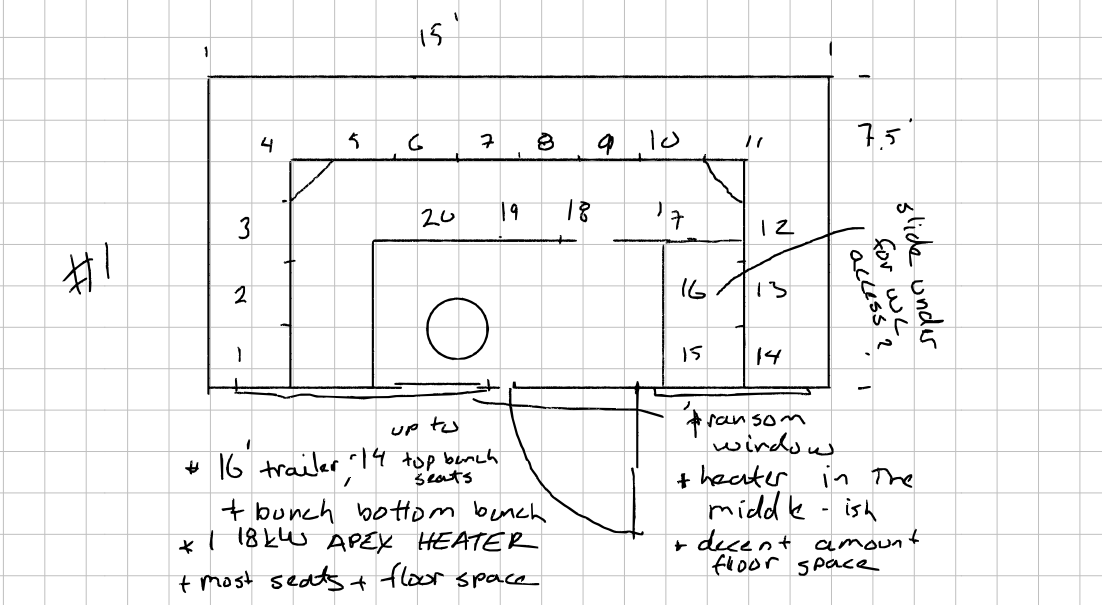
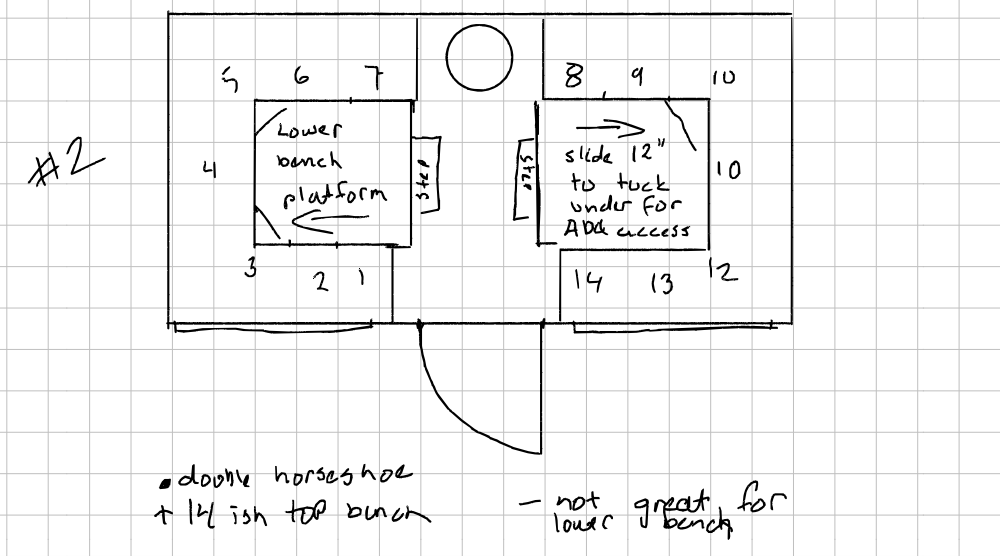
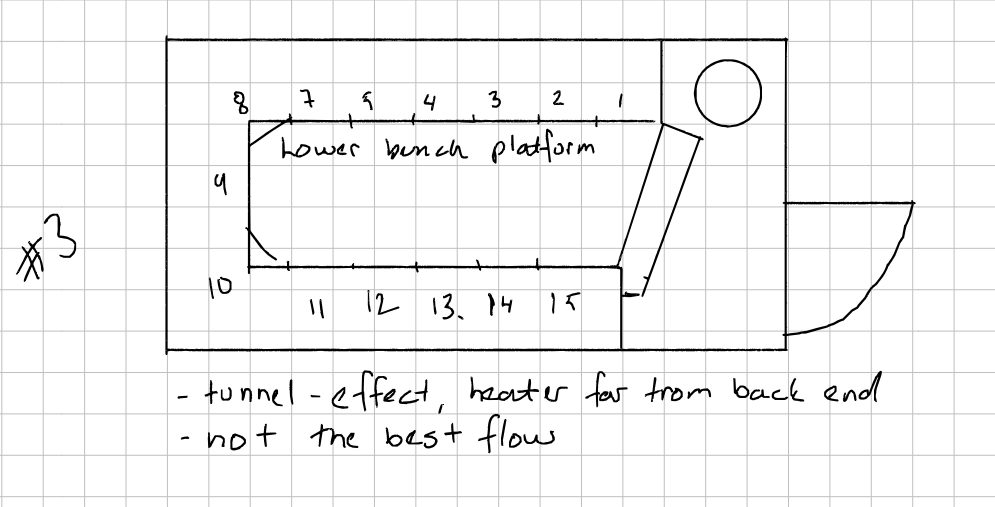
Reality: capacity is a design decision, not just a headcount. We learned this firsthand. An earlier 10-person sauna we built tended to pull everyone into one shared conversation, with less room for the quieter, solo moments a sauna can also hold. A tiny two-person spa sauna isn't automatically more "intimate" either. Size alone doesn't create connection, but we know that layout does. What actually matters is whether a room is laid out to hold both modes, real conversation and real quiet, at whatever size it's built for. Kotisauna's room seats up to 16, in a U-shaped layout sized around research on group dynamics (people gather in groups of 12 to 15 best for trust and connection, from Priya Parker's The Art of Gathering) rather than just how many bodies could physically fit.
A few of the layout options we sketched before landing on the U-shape, balancing bench depth for lying down against a shape that still supports easy conversation.
Myth: A good sauna should look like a spa
Reality: bright, glassy, minimalist wellness-spa design is one aesthetic choice, not a more evolved version of a sauna, and choosing differently doesn't mean giving up a beautiful space. There's just as much intention behind a room that leans dim and cozy instead of open and cathedral-like; the difference is what the lighting is actually for. A space built for visibility and a sense of openness serves a shared, public feeling well. A space built to hold quiet moments and deeper social connection (what we wanted for Kotisauna) calls for something else: soft, low light, a room that feels close rather than vast. It's the same instinct behind the oldest saunas in Finland, the dark, tucked-in savusauna (smoke sauna) tradition. A cozy room holds you differently than a bright, soaring one does. It's part of why this kind of sauna can feel like a space you disappear into, rather than one you're performing in.


So what should you actually expect?
We're not telling you Kotisauna is the best sauna you'll ever sit in, or that a spa sauna down the street is doing something wrong. It's just a different tradition, built around a different kind of experience achieving a different outcome. Now that you know what tends to separate the two, the next time you're in any sauna, ask your body a few questions. Does the heat feel even, or does it collect in one spot? How am I expected to act in this space? Does it turn sharp the moment water hits the rocks, or does it stay round and full? Is the room quiet enough to disappear into, and can you still find a real conversation if you want one? You don't need to be a sauna expert to notice the difference, your body already knows what it's looking for.
With thanks to:
Lassi Liikkanen, for the foundational principles of sauna design and building that shaped our technical approach.
Homecraft, for a stove built with the craft and stone capacity to make real löyly possible.
Priya Parker and The Art of Gathering, for the thinking behind our layout and capacity.
Kamu Sauna, our build partner on the structure itself — design, construction, and materials sourced entirely through independent Canadian businesses.
Photo Credit: [left] Rajaportti Sauna, Tampere, [middle] Pereensaaren sauna, [right] Loyly Sauna, Helsinki